Wireless Infrastructure
Meeting the continually evolving demands for 4G LTE & 5G wireless infrastructure applications with RFHIC's gallium nitride (GaN) on silicon carbide (SiC) technology solutions
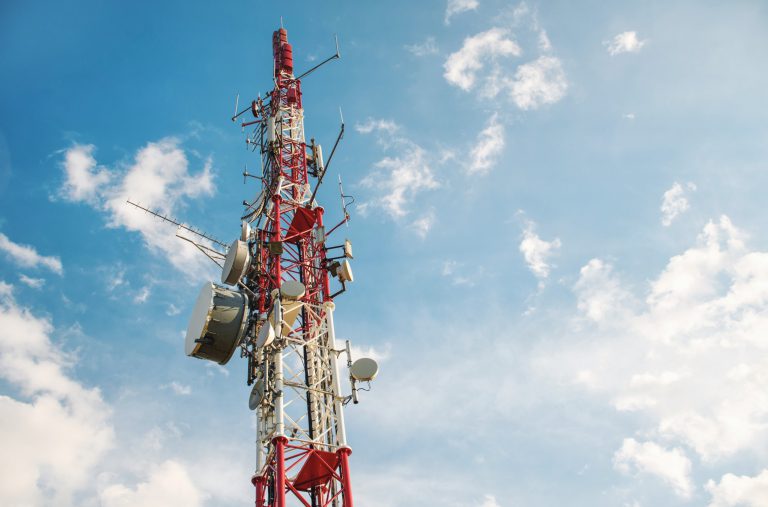





A weather radar is a pulse-doppler radar that detects the motion and intensity of snow, rain, and or hail to analyze and provide information about various weather conditions. Due to the increase in fluctuations in weather conditions such as thunderstorms, cyclones, ice storms, and snowstorms, there is a demand for more reliable and accurate weather radar systems worldwide.
Despite vacuum-tubes technical maturity, its shortcomings make developers looking to improve Radar performance turn to other technologies. Solid-state technology has been continuously evolving over the past few years, has caught radar developers’ eyes, and has become the global trend in recent and future radar system development.
Existing tube-type transmitters require high voltage power supply units ranging from 14kV to 38kV. Operating at such high voltages requires extra caution to system operations, requiring specialized personnel to handle such systems. Also, increasing the number of high voltage systems increases the safety risk within a production facility.

With the shift towards autonomous learning and lean manufacturing, cutting downtime is key for all radar manufacturers. Current radar transmitter systems that utilize tube-based systems (magnetrons and klystrons) have lifetimes around 4,000 to 6,000 hrs. Due to their short lifespan, the transmitter system requires replacements every half year to 1 year. These limitations result in a halt in observation times/ downtime, frequent maintenance, and a high maintenance cost.
On the other hand, solid-state-based transmitters provide a much longer lifetime (avg. 50,000 to 100,000 hrs. *lifetimes can differ based on operational use) compared to magnetrons and klystrons. Due to its combining and redundant architecture, the system provides graceful degradation in case of amplifier failure. The user can replace the failed power amplifier module while the transmitter operates with less power. Mitigating the need for a complete transmitter system to be secured at the radar site. Even hot-swap function can be implemented, which allows continuous operation while maintenance without shutting down the system during the replacement of defective parts, thereby securing overall stability of the system operation. This also res in far fewer component breakdowns resulting in less downtime, maintenance, and maintenance cost.
With solid-state technology, narrower beam widths can allow for higher resolution imagery. Resulting in better and more accurate detection for the user.
With the shift towards autonomous learning and lean manufacturing, cutting downtime is key for all radar manufacturers. Current radar transmitter systems that utilize tube-based systems (magnetrons and klystrons) have lifetimes around 4,000 to 6,000 hrs. Due to their short lifespan, the transmitter system requires replacements every half year to 1 year. These limitations result in a halt in observation times/ downtime, frequent maintenance, and a high maintenance cost.