Wireless Infrastructure
Meeting the continually evolving demands for 4G LTE & 5G wireless infrastructure applications with RFHIC's gallium nitride (GaN) on silicon carbide (SiC) technology solutions






MaxLinear transceivers and linearization technology combine with RFHIC’s power amplifiers to exceed 3GPP requirements for 5G New Radio (NR)
CARLSBAD, CA/ Anyang, South Korea – August 10, 2021 – MaxLinear, Inc. (NYSE: MXL), a leading provider of radio frequency (RF), analog, digital and mixed-signal integrated circuits, and RFHIC (KOSDAQ: 218410), a leader in the design and manufacture of high-performance active RF and microwave components and hybrid modules recently verified that RFHIC’s Gallium Nitride (GaN) transistor for 5G macro base stations and hybrid power amplifier module (PAM) for 5G massive MIMO base stations achieved breakthrough linearization performance when combined with MaxLinear’s MaxLIN linearization technology, exceeding 3rd Generation Partnership Project (3GPP) requirements for ultra-wideband 5G New Radio (5G NR).
RFHIC and MaxLinear are collaborating to optimize the combined performance of power amplifiers, transceivers, and linearization at key 5G bands (3.4 to 3.8GHz and 3.7 to 3.98GHz). The collaboration entails RFHIC’s highly efficient GaN solutions for 5G telecom infrastructure, MaxLinear’s high-performance transceivers, and MaxLinear’s ultra-wideband linearization solution (MaxLIN), achieving outstanding efficiency and linearity performance.
MaxLinear’s transceiver portfolio includes:
These transceivers are software compatible, creating a single platform solution that customers can leverage for any application. By providing the transceiver and the linearization solution, along with test data that includes the full transmit lineup, MaxLinear customers can move quickly to production without performance surprises.
RFHIC’s GaN transistors for 5G macro base stations, ID36411D operating at 3.4 to 3.8GHz and ID38411DR operating at 3.7 to 3.98GHz, are designed to achieve the highest efficiency with 100MHz, 200MHz, and 300MHz IBW. The ID36411D achieves over 47% power efficiency for an average output power of 47.41dBm (55W). MaxLIN improves linearity by over 25dB to exceed 3GPP and Federal Communications Commission (FCC) requirements with margin.
“Our GaN power amplifier solution will accelerate the size reduction of 5G base station equipment because of its outstanding power efficiency and high integration. Also, its breakthrough wide bandwidth performance will enable one radio unit to support multiple wireless service providers,” said Sam Kim, Vice President at RFHIC.
“Combining RFHIC technology with MaxLinear transceivers and MaxLIN ultra-wideband linearization provides the highest performance solution available on the market for wideband use cases, such as the crucial C-Band recently auctioned in the U.S.,” said Helen Kim, Vice President of MaxLinear’s Wireless Technologies & IP. “With our automated lineup optimization tool, we can quickly customize the full transmit line-up and provide our customers a market-ready solution in days, rather than months.”
The collaboration of RFHIC and MaxLinear will support all global sub-6GHz 5G spectrums and contribute to the continued innovation of conventional base station equipment and O-RAN technology.
To learn more about RFHIC and its products, please visit www.rfhic.com. To learn more about MaxLinear and its products, please visit www.maxlinear.com.
MaxLinear, Inc. (NYSE: MXL) is a leading provider of radio frequency (RF), analog, digital and mixed-signal integrated circuits for the connectivity and access, wired and wireless infrastructure, and industrial and multimarket applications. MaxLinear is headquartered in Carlsbad, California. For more information, please visit www.maxlinear.com. MxL and the MaxLinear logo are trademarks of MaxLinear, Inc. Other trademarks appearing herein are the property of their respective owners.
RFHIC Corporation is a leader in designing and manufacturing high-performance active RF & Microwave components and hybrid modules for telecom infrastructures, defense industries, and customized solutions. RFHIC Corporation is headquartered in Anyang, South Korea, and its US Corporation is in Morrisville, NC. For more information, please visit www.rfhic.com. RFHIC logo is a trademark of RFHIC Corporation. Other trademarks appearing herein are the property of their respective owners.
This press release contains “forward-looking” statements within the meaning of federal securities laws. Forward-looking statements include, among others, statements concerning or implying future financial performance, anticipated product performance and functionality of our products or products incorporating our products, and industry trends and growth opportunities affecting MaxLinear, in particular, statements relating to MaxLinear’s ultra-wideband linearization solution (MaxLIN) and MxL155x and MxL16xx 400MHz transceivers, current or future benefits of collaboration with RFHIC Corporation, functionality, integration, interoperability, performance, and the benefits of the use of such products and technologies. These forward-looking statements involve known and unknown risks, uncertainties, and other factors that may cause actual results to differ materially from any future results expressed or implied by these forward-looking statements. We cannot predict whether or to what extent these new or existing products will affect our future revenues or financial performance. Forward-looking statements are based on management’s current, preliminary expectations. They are subject to various risks and uncertainties that could cause results to differ materially from those described in the forward-looking statements. Forward-looking statements may contain words such as “will be,” “will,” “expect,” “anticipate,” “continue,” or similar expressions and include the assumptions that underlie such statements. The following factors, among others, could cause actual results to differ materially from those described in the forward-looking statements: intense competition in our industry and product markets; risks relating to the development, testing, and commercial introduction of new products and product functionalities; the ability of our customers to cancel or reduce orders; and uncertainties concerning how end-user markets for our products will develop. Other risks potentially affecting our business include risks relating to acquisition integration; our lack of long-term supply contracts and dependence on limited sources of supply; potential decreases in average selling prices for our products; impacts from public health crises such as the Covid-19 pandemic or natural disasters; and the potential for intellectual property litigation, which is prevalent in our industry. In addition to these risks and uncertainties, investors should review the risks and uncertainties contained in MaxLinear’s filings with the United States Securities and Exchange Commission, including risks and uncertainties arising from other factors affecting the business, operating results, and financial condition of MaxLinear, including those set forth in MaxLinear’s most recent Annual Report on Form 10-K for the year ended December 31, 2020 and Quarterly Report on Form 10-Q for the quarter ended June 30, 2021, in each case as filed with the Securities and Exchange Commission. All forward-looking statements are qualified in their entirety by this cautionary statement. MaxLinear is providing this information as of the date of this release and does not undertake any obligation to update any forward-looking statements contained in this release as a result of new information, future events, or otherwise.
This press release contains forward-looking statements involving risks and uncertainties, both known and unknown, that may cause actual results to differ materially from those indicated. Actual results may differ materially due to a number of factors, including the risk that we may be unable to manufacture these new products with sufficiently low cost to offer them at competitive prices or with acceptable margins; the risk we may encounter delays or other difficulties in ramping up production of our capacity to supply these products; customer acceptance of our products; the rapid development of new technology and competing products that may impair demand or render RFHIC’s products obsolete; and other factors discussed in RFHIC’s filings with the Korean Stock Exchange Commission, including its report on Form 10-K for the year ended June 28, 2020, and subsequent filings.
MaxLinear, Inc. Press Contact:
Debbie Brandenburg
Sr. Marketing Communications Manager
Tel: +1 669-265-6083
dbrandenburg@maxlinear.com
MaxLinear, Inc. Corporate Contact:
Helen Kim
Vice President, Wireless Technologies & IP
Tel: +1 760-692-0711
RFHIC Corp. Corporate Contact:
Sam Kim
Vice President, Business Development
Tel : +1 919-655-1131
Sam.Kim@rfhicusa.com
Anyang, South Korea, December 07, 2020 – RFHIC Corporation (KOSDAQ:218410), a global leader in designing and manufacturing GaN RF & Microwave solutions.
One thing is for sure, is that COVID-19 has had a direct and indirect impact on all of us in the way we live and the way we work. With that being said, RFHIC remains committed to pushing forward and continuing our focus strategies for next-generation RF & Microwave technology in 5G, Defense, and RF Energy. RFHIC is determined to get through these challenging times as a much stronger company- to be more agile and well-positioned within the RF & MW market.
If you have a technical problem or a question about a product, or if you need anything else, contact us and we’ll assist you in the best way possible.
We’re committed to being a great partner and GaN solutions provider with the goal of creating a better and faster world.
RFHIC Corporation provides innovative GaN solutions that transform how the world operates, communicates, and protects. Our cutting edge GaN technology is the core foundation of all our inventions for creating a better, faster, and more efficient world. As a global leader in designing and manufacturing GaN RF & Microwave components, we envision spurring a new era of high-powered and reliable devices for the next big change in industrial, cellular, and defense technology. Headquartered in Anyang, South Korea.
RFHIC has a US sales office in Morrisville, North Carolina, and sales distributors throughout North America, Europe, and Asia. RFHIC is an ISO9001 (International quality standard) and ISO14001 (Environmental management standard) certified company, providing reliable and dependable products worldwide.
Media Contacts:
Grace Cho
Grace.cho@rfhic.com
RFHIC’s 6kW, solid-state microwave generator provides enhanced performance for various 2.4-2.5 GHz industrial, scientific, and medical (ISM) applications. The 6kW, gallium-nitride (GaN) solid-state microwave generator is designed as a one-to-one replacement of bulky and unreliable tube-based power systems (magnetrons, klystrons, etc.) for various applications such as:
RFHIC’s compact and lightweight RIU256K0-40TG (6kW, GaN solid-state microwave generator) generator operates from 2.4 to 2.5 GHz, combining four 1.6 kW gallium-nitride (GaN) power amplifiers (PAs) into a remote, solid-state head. The complete microwave generator system comes with a power supply unit, solid-state power amplifier (SSPA) head, cable assembly, and waveguide converter. (see Figure 1).

The solid-state power amplifier (SSPA) supports both CW and pulse operation and can be customized to end-user application requirements. With an adjustable power range from five to 100 percent of rated output, the RIU256K0-40TG (6kW, GaN solid-state microwave generator) maintains high system efficiency at both low and high power (see Figure 2).
Each of the four gallium-nitride (GaN) power amplifiers (PAs) in the generator uses RFHIC’s high-performance gallium-nitride (GaN) on silicon-carbide (SiC) transistor technology, which provides wide bandwidth, high efficiency, high breakdown voltage, and reduces the overall size of the system. The RIU256K0-40TG (6kW, GaN solid-state microwave generator) uses 200 W transistors (IE24200P), which have a saturated output power of 230 W and 74 percent drain efficiency at 50 V bias. The fully matched transistors are integrated with DC-blocking capacitors on both RF ports to simplify system integration.
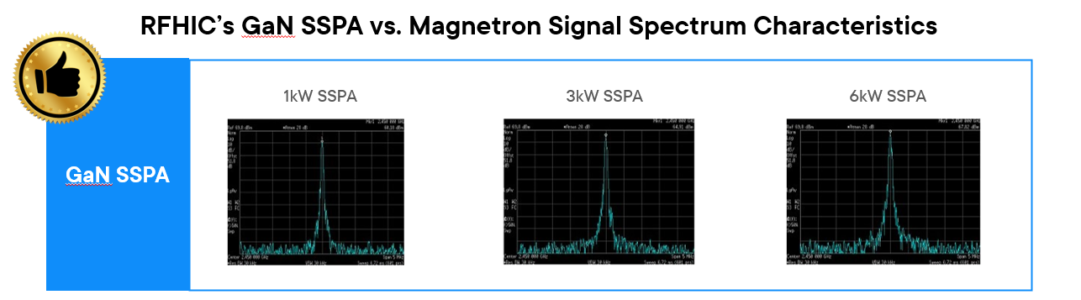
Historically, numerous RF energy applications relied on vacuum tubes or magnetrons as their primary power source. However, these systems came with notable drawbacks in terms of frequency, power, and phase control. In contrast, the RIU256K0-40TG (6kW, GaN solid-state microwave generator)incorporates RFHIC’s advanced drive and control module, enabling precise adjustment of both output frequency and power. As a result, this generator produces an exceptionally clean signal with minimal noise and spurious interference, far surpassing the performance of traditional magnetrons (refer to Figure 3).
Another significant advantage lies in the ability to instantly generate full power without any warm-up time. In contrast, tubes often have short lifespans, frequently less than 6,000 hours. This not only leads to downtime but also escalates operating costs. The RIU256K0-40TG (6kW, GaN solid-state microwave generator) boasts an impressive lifespan ranging from 50,000 to 100,000 hours, depending on operating conditions. This extended longevity translates to substantial cost savings.
Unlike magnetrons and other tube-based systems reliant on a single power source, the RIU256K0-40TG (6kW, GaN solid-state microwave generator) features a configuration with four robust GaN solid-state power amplifiers (SSPAs). This design ensures graceful degradation in case one of the PAs encounters an issue. In contrast, tube-based systems necessitate high-voltage power supplies within the generator, which are prone to arcing. The GaN solid-state power amplifier (SSPA) operates at a safer voltage of 50 V.
Furthermore, the RIU256K0-40TG implements efficient water cooling to eliminate the need for large metal heat sinks, thus reducing the overall size of the generator. This innovative approach allows the SSPA to seamlessly integrate with existing cooling infrastructure in tube-based systems, resulting in cost savings during installation and operation. The system incorporates multiple sensors to monitor water flow rate, SSPA temperature, and VSWR. In the event of abnormal operation, the system automatically initiates a shutdown and alerts the user, safeguarding the generator from damage.
The RIU256K0-40TG also offers user-friendly controls with an LCD touch-screen and jog wheel, granting complete access to system controls, sensors, and alarms. Additionally, comprehensive monitoring and management are accessible through a laptop or remote PC. For added convenience, the system can be controlled remotely via PLC, CAN, or Bluetooth, providing users with versatile options for system management.
The RIU256K0-40TG (6kW, GaN solid-state microwave generator) is a self-contained, rack-mounted system comprising two main components:
GaN Solid-State Power Amplifier (SSPA) Head with Isolator: This unit measures 43.2 cm in width, 90.2 cm in length, 23.8 cm in height, and weighs 54.2 kg.Power Supply: The power supply unit has dimensions of 48.3 cm in width, 43.2 cm in length, and 17.7 cm in height, with a weight of 29 kg.The power supply operates on a three-phase, 380~480 VAC and generates the required 50 V bias for the gallium-nitride (GaN) on silicon-carbide (SiC) transistors. Notably, the power supply incorporates three rectifier modules designed for load sharing, hot-swappability, and n+1 redundancy. This means that if one of the power modules fails, the SSPA can continue to operate without the need to replace the entire generator.
To achieve a 6 kW continuous wave (CW) output, four 1.6 kW SSPAs are combined using RFHIC’s four-way waveguide combiner. Operating within the 2.4 to 2.5 GHz frequency range, the WR340 combiner offers exceptional performance, with a maximum insertion loss of 0.1 dB, a 1.1:1 voltage standing wave ratio (VSWR), and an imbalance of less than 3 degrees among its ports.
Additionally, the generator is designed with scalability in mind. Users have the flexibility to integrate RFHIC’s commercial off-the-shelf power amplifiers (PAs) without the need for manual phase synchronization. This adaptability maximizes amplifier utilization, reduces capital expenses, and shortens development timelines.
For any inquiries or questions, please complete the contact form, and a sales representative will be readily available to assist you.
Driving Microwave Energy with GaN Solid State Technology
Ever since Percy Spencer first melted a chocolate bar in his shirt pocket in 1945, industrial microwave power’s primary source has not changed (until now). Our familiar tube-based friend, Magnetron, has been the sound power source for our industry for over half a century. It has served us well, figuratively and literally (think of all the late-night microwavable mac and cheese). But as technology advances, the stealthy Magnetron can no longer meet the demands required by this industry. It is time that we cross the chasm and adopt the technological advancements of the transistor.
Before we jump into the magical possibilities of GaN solid-state technology, let us take a step back and understand what microwave heating is. Microwave heating is a Multiphysics phenomenon that involves electromagnetic waves and heat transfer; any material exposed to the electromagnetic field creates vibration and rotation of the polarized molecules inside the material. This friction between molecules increases the temperature of the material, thus heating it. Most materials like food, biological tissues, chemicals, and drugs have high-water content, allowing them to readily absorb microwave energy.
Magnetron tubes have an approximate lifetime of only a few thousand hours, from 1,500 to 6,000 hours, depending on the tube and application. Due to their short lifetime, they must be replaced frequently, resulting in costly downtime and repairs. GaN solid-state microwave systems, on the other hand, are designed to last more than 50,000 to 100,000 hours. Also, unlike magnetrons that require high voltages (4~15 kV), GaN solid-state microwave systems only require a low voltage of 50V, resulting in safer operations and significantly lowering costs.
Lastly, RFHIC’s GaN solid state technology’s most significant advantage is its capability to control the frequency, phase, power, and signal source precisely and digitally. This next-generation technology will host new profound capabilities such as frequency sweeping, band mapping, and pulse width modulation, resulting in optimized end products.
The possible microwave applications utilizing GaN solid state are endless – from food processing to growing artificial gemstones. The microwave heating market is expected to reach $1.6 billion by 2027. The main drivers are expected to come from food & beverage, plastics, chemicals, and the paper industry.
The food & beverage industry has witnessed tremendous growth in the past few years and is expected to reach $7.5 trillion by 2023. One of the major factors driving this growth is the rising preference for processed foods over unprocessed foods due to consumers’ changing lifestyles. However, consumers demand higher quality and more nutritional processed foods made with real ingredients.
With this increase in demand, major food companies are aggressively adopting newer and more profound technologies to benefit the food & beverage industry. Industrial microwave heating can be used for multiple applications within the food and beverage industry, to name a few – microwave drying, pasteurization, sterilization, tempering, cooking, blanching, and much more.
Previously, magnetrons were the only viable power source for food and beverage applications due to their high power and efficiency. With technological advancements, solid-state devices are starting to provide better or equivalent results in reliability, efficiency, power, and costs.
RFHIC’s Low Cost, Efficient, and Powerful (L.E.A.P) GaN solid-state technology will transform food and beverage processing.
Learn More Check out our GaN Solid State Portfolio for Food & Beverage Applications
The global ablation technology market is projected to reach USD 4.73B by 2021, with a growing CAGR of 10.9%. The rising incidence of cancer and an ever-increasing prevalence of cardiovascular diseases are major factors driving the ablation technologies market.
The ablation market is categorized into laser/light, radiofrequency, cryoablation, microwave, and hydrothermal ablation technology.
Among them, the microwave ablation segment is expected to grow at the highest rate due to the many advantages it offers
Microwave ablation generators utilize one of two power sources: a magnetron or solid-state amplifier. However, magnetrons require a high-voltage power supply, which often entails a bulky and heavy transformer. RFHIC’s GaN solid state generators, on the other hand, require a low voltage power supply of 50V, reducing size significantly. Our GaN solid state generators are fabricated using our cutting-edge gallium nitride (GaN) on silicon carbide (SiC) transistors, enabling excellent thermal stability, up to 68% efficiency, and power levels capable of up to multi-kWs.
Learn More Check out our GaN Solid State Portfolio for Microwave Ablation
Microwave plasma is one of the application areas of significant economic value in the industry and promises for the future. Plasmas, sources of active ions and free electrons, enable many applications in research projects and commercial sectors. The most widespread application of RF and microwave plasmas is within the semiconductor industry, where plasmas are utilized for:
Sustain plasmas, and microwave energy has several advantages compared to conventional technology.
Explore more about our High Power Microwave Plasma Sources
Over the last 75 years, the Magnetron has been the main and only successful source for microwave energy despite its many limitations (frequency stability, short lifetime, and reliability). But now, all that has changed thanks to the advancements of the transistor.
Now, solid state power sources can provide up to multi-kWs of power with efficiencies up to 66% in both mid to high band frequency ranges (900-930 MHz, 2.4-2.5GHz, 5.8GHz).
Gallium nitride (GaN) solid state microwave sources will give us the ability to overcome system design constraints and embark upon a new generation of discovery and innovation, further broadening the scope of microwave power applications.
So goodbye, Magnetron, and hello GaN Solid-State!
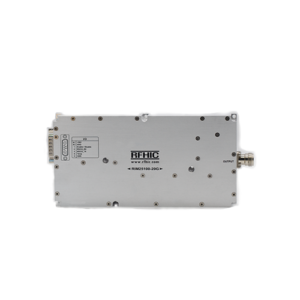
Anyang, South Korea, October 6, 2020 – RFHIC Corporation (KOSDAQ:218410), a global leader in designing and manufacturing GaN RF & Microwave solutions, released their latest 100W, 2.4 – 2.5 GHz, CW GaN solid-state generator (RIM25100-20G) designed ideally for non-invasive tumor ablation using microwave energy.
The RIM25100-20G is fabricated using RFHIC’s cutting edge gallium nitride (GaN) on SiC transistors providing a typical efficiency of 60% at 100W CW. Unlike magnetrons that require high voltage power supplies, RFHIC’s solid-state generator requires only a 50V low voltage power supply, simplifying system integration and lowering overall infrastructure costs.
This industry-leading SWaP-C (size, weight, power, and cost) generator is designed with a CPU allowing users to control the systems frequency, power, and signal source (CW or Pulse) for optimal performance. RFHIC’s GaN SiC HEMTs provide excellent thermal stability resulting in reliable prolonged continuous operations.
Microwave energy also offers several advantages for tumor ablation, including faster heating over a larger volume, enhanced multiple applicator support, less susceptibility to heat sinks or local perfusion, and no requirement for ground pads. All system modifications and Custom designs are available upon request.
To learn more, please contact us.
RFHIC Corporation provides innovative GaN solutions that transform how the world operates, communicates, and protects. Our cutting edge GaN technology is the core foundation of all our inventions for creating a better, faster, and more efficient world. As a global leader in designing and manufacturing GaN RF & Microwave components, we envision spurring a new era of high-powered and reliable devices for the next big change in industrial, cellular, and defense technology. Headquartered in Anyang, South Korea.
RFHIC has a US sales office in Morrisville, North Carolina, and sales distributors throughout North America, Europe, and Asia. RFHIC is an ISO9001 (International quality standard) and ISO14001 (Environmental management standard) certified company, providing reliable and dependable products worldwide.
Media Contacts:
Grace Cho
Grace.cho@rfhic.com
Next Generation Weather Radar with RFHIC’s X Band GaN Solid State Transmitter
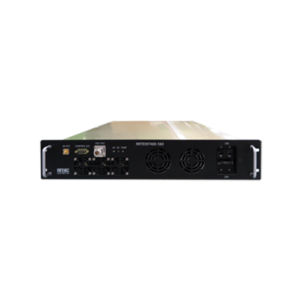
Anyang, South Korea, September 29, 2020 – RFHIC Corporation (KOSDAQ:218410), a global leader in designing and manufacturing GaN RF & Microwave solutions, introduced its latest 400W, X band Gallium Nitride (GaN) solid state transmitter (RRT9397400-560) designed for high power radar drivers and polarimetric weather radar system applications.
The RRT9397400-560 delivers 400W of pulsed output power operating at 9,300 to 9,700 MHz, with a duty cycle of 10 percent. This GaN solid-state transmitter is designed to replace outdated and uncontrollable tube-based amplifiers (TWTAs, klystrons, magnetrons) thus providing exceptional thermal stability and reliability. This compact and lightweight transmitter is 19” wide and 2U high and can be installed on the radar mast simplifying system integration and reducing the overall footprint. Due to its scalable architecture, this rack-mountable transmitter is power buildable in case requirements grow.
RFHIC’s GaN solid-state transmitter is designed with a CPU system allowing the user to configure the radar’s pulse width, power, and bandwidth optimizing overall radar performance. The transmitter is also equipped with a detection sensor that monitors the system’s temperature, forward and reverse power to prevent damages to the system. The transmitter is pre-equipped with a low voltage power supply unit (115V) simplifying system integration and lowering overall infrastructure costs. RFHIC’s GaN solid state technology has demonstrated precise and reliable performance for various weather radar customers worldwide.
Custom designs and modifications are welcomed and available upon request.
To learn more, contact us through our website and a sales representative will be more than happy to assist you.
RFHIC Corporation provides innovative GaN solutions that transform how the world operates, communicates, and protects. Our cutting edge GaN technology is the core foundation of all our inventions for creating a better, faster, and more efficient world. As a global leader in designing and manufacturing GaN RF & Microwave components, we envision spurring a new era of high-powered and reliable devices for the next big change in industrial, cellular, and defense technology. Headquartered in Anyang, South Korea.
RFHIC has a US sales office in Morrisville, North Carolina, and sales distributors throughout North America, Europe, and Asia. RFHIC is an ISO9001 (International quality standard) and ISO14001 (Environmental management standard) certified company, providing reliable and dependable products worldwide.
Media Contacts:
Grace Cho
Grace.cho@rfhic.com
RFHIC Broadening the Gap with Gallium Nitride (GaN)
Anyang, South Korea, September 8, 2020 – RFHIC Corporation (KOSDAQ:218410), a global leader in designing and manufacturing GaN RF & Microwave solutions, released their latest 50W, CW GaN solid-state wideband power amplifier (RWP15040-10) designed ideally for ground to ground, ground to air, satellite communications and direct video broadcasting applications.
This compact wide bandwidth solid-state power amplifier operates from 500 to 2,500 MHz and peak power of 50W. Using its patented technology, the amplifier includes thermal overload and input power overdrive protection. The RWP15040-10 delivers 38dB of power gain at pin 9 dBm and a power gain flatness of ±1.0 dBpp. This highly thermally resistant wideband amplifier provides an input return loss of -5 dB and operates at a supply voltage of 32 V. The quiescent current consumption ranges from 1.2 A (Typ) to 1.7 A (Max). This SWaP-C power amplifier is sized at 98.8 x 75 x 25 and weighs 355 g reducing the system’s overall footprint. The rugged coaxial packages are designed with stainless steel SMA Female connectors. An external heat sink is pre-equipped for cooling. RFHIC’s wideband amplifiers cover L, S, C, and X frequency bands and are designed to withstand tough environmental conditions like humidity, shock, vibration, and altitude.
System modifications and Custom designs are available upon request. To learn more, don’t hesitate to get in touch with us. Contact Us
About RFHIC
RFHIC Corporation provides innovative GaN solutions that transform how the world operates, communicates, and protects. Our cutting edge GaN technology is the core foundation of all our inventions for creating a better, faster, and more efficient world. As a global leader in designing and manufacturing GaN RF & Microwave components, we envision spurring a new era of high-powered and reliable devices for the next big change in industrial, cellular, and defense technology. Headquartered in Anyang, South Korea.
RFHIC has a US sales office in Morrisville, North Carolina, and sales distributors throughout North America, Europe, and Asia. RFHIC is an ISO9001 (International quality standard) and ISO14001 (Environmental management standard) certified company, providing reliable and dependable products worldwide.
Media Contacts:
Grace Cho
Grace.cho@rfhic.com

Anyang, South Korea, September 1, 2020 – RFHIC Corporation (KOSDAQ:218410), a global leader in designing and manufacturing GaN RF & Microwave solutions, released their latest 100W, CW GaN solid-state wideband power amplifier designed for next-generation electronic warfare (EW), radar, military communications, and other applications where space, cooling, and power are limited. This instantaneous wide bandwidth solid state power amplifier operates from 2,000 to 6,000 MHz and provides a gain flatness of 1.5 dB and 22% efficiency. The 100W, CW GaN solid-state power amplifier is fully matched to 50 Ohms, simplifying system design. The amplifier is built using RFHIC’s state of the art GaN on SiC HEMTs providing excellent thermal stability and compact size (175 x 90 x 23 mm).
The RWP2060080-50 is a great replacement for conventional traveling-wave tubes (eg. klystrons, TWTA, magnetrons), providing key features such as ultra-wideband operation, full power across entire bandwidth, low harmonic distortion, low voltage operation, soft failure, and graceful degradation. RFHIC’s wideband amplifiers cover L, S, C, and X frequency bands and are designed to withstand tough environmental conditions like humidity, shock, vibration, and altitude. These rugged coaxial packages are designed with stainless steel SMA Female (RF Input) and N Female (RF Output). For system cooling, an external heat-sink is required.
All system modifications and Custom designs are available upon request. To learn more, please contact us.
About RFHIC
RFHIC Corporation provides innovative GaN solutions that transform how the world operates, communicates, and protects. Our cutting edge GaN technology is the core foundation of all our inventions for creating a better, faster, and more efficient world. As a global leader in designing and manufacturing GaN RF & Microwave components, we envision spurring a new era of high-powered and reliable devices for the next big change in industrial, cellular, and defense technology. Headquartered in Anyang, South Korea.
RFHIC has a US sales office in Morrisville, North Carolina, and sales distributors throughout North America, Europe, and Asia. RFHIC is an ISO9001 (International quality standard) and ISO14001 (Environmental management standard) certified company, providing reliable and dependable products worldwide.
Media Contacts:
Grace Cho
Grace.cho@rfhic.com
RFHIC’s Showcases New Product Offerings at the 2020 Virtual International Microwave Symposium
Anyang, South Korea, August 19th, 2020 – RFHIC Corporation (KOSDAQ:218410), a global leader in designing and manufacturing GaN RF & Microwave solutions, showcased its latest product offerings for 5G, Next Generation Radar, and RF Energy (Industrial, Scientific, and Medical) applications during the 2020 Virtual International Microwave Symposium Conference. It showcased a wide range of GaN solid-state power amplifiers designed ideally for particle accelerators, LINACs, plasma lighting, industrial heating, drying, microwave synthesis, and so much more.
About RFHIC
RFHIC Corporation provides innovative GaN solutions that transform how the world operates, communicates, and protects. Our cutting edge GaN technology is the core foundation of all our inventions for creating a better, faster, and more efficient world. As a global leader in designing and manufacturing GaN RF & Microwave components, we envision spurring a new era of high-powered and reliable devices for the next big change in industrial, cellular, and defense technology. Headquartered in Anyang, South Korea.
RFHIC has a US sales office in Morrisville, North Carolina, and sales distributors throughout North America, Europe, and Asia. RFHIC is an ISO9001 (International quality standard) and ISO14001 (Environmental management standard) certified company, providing reliable and dependable products worldwide.
Media Contacts:
Grace Cho
Grace.cho@rfhic.com
MWJ Executive Interview : RFHIC’s Co-Founder and CTO, Samuel Cho

RFHIC Corporation, which stands for Radio Frequency Hybrid Integrated Circuit, was founded in 1999 with our cofounder and CEO, David Cho. The motivation all started with an incurable need for cost-effective GaAs components for satellite applications within South Korea. After developing mainly GaAs components, we dove in to developing and manufacturing GaN for telco applications, due to its exceptional performance features.
Our vision for the company is the same as 20 years ago, which is to provide our customers with excellent quality and cost-effective RF and microwave components worldwide.
Our initial focus mainly targeted the commercial telecommunications market, especially base stations. After successfully commercializing our GaN on SiC for telco, we expanded towards the defense sector, targeting high-powered radar systems utilizing our high-powered GaN SSPAs. After multiple successful defense and commercial radar projects, we established name value overseas with top global defense contractors, like Raytheon, Lockheed Martin, Northrop Grumman, L3Harris and so much more.
We now have expanded our product portfolio in designing and manufacturing high-powered subsystems for various high-powered industrial, scientific and medical (ISM) applications. With this capability, we can provide our customers with a customizable, one-stop GaN solution — from transistor to system level — lowering costs and getting our customers’ products to market faster.
RFHIC Corporation is the first and only GaN device to subsystems solution provider in the world, providing our customers with customizable, cost-effective and fast GaN solutions for telco, defense and ISM applications.
Our headquarters facility, located in Anyang, South Korea, is equipped with a grade 4 clean room production facility that is capable of supporting die attach, wire bonding, packaging, chip-on-board, SMT, RF testing, power amplifier assembly, subsystem assembly and ISO-certified quality testing.
I think our biggest differentiator from other suppliers is that we are a fabless company. Being fabless allows us to experiment and utilize different technologies and materials best suited for our customers. It also allows us to allocate our resources more towards R&D, sales and marketing, enabling us to reach a wider audience.
We were able to experiment with various materials like GaAs, LDMOS, GaN on Si and GaN on SiC from the beginning, allowing us to get a clear understanding of what compound semiconductor material was the best fit for us to maintain competitiveness. As technology rapidly progressed, we foresaw at an early stage that conventional materials like GaAs and LDMOS would not be capable of efficiently performing at those higher power and frequency levels.
Being the underdogs within the RF/microwave industry, we tend always to look 10, 20 steps ahead of technology to differentiate ourselves from our competitors. We felt GaN on SiC was the future. GaN is a wide-bandgap semiconductor material that can sustain high breakdown fields and high saturation velocity compared to other conventional semiconductor materials like silicon or GaAs. SiC exhibits exceptional thermal characteristics, allowing the heat to be dissipated in a faster and efficient manner in a much smaller form factor.
We have reached a stage where GaN is the new “it” compound material and is becoming more widely used among the RF/microwave industry. But I also see within three to four years, GaN on SiC running into physical limitations for higher power applications within the defense and ISM industry, which is what led us to developing the GaN on diamond transistor.
Diamond has five times the thermal conductivity of SiC, allowing GaN devices to operate at much higher power levels while maintaining stable temperatures, significantly improving reliability and performance.
RFHIC’s GaN on diamond epi process starts by taking a GaN epitaxial wafer and attaching a temp carrier on top to protect the GaN surface. Once the temp carrier is attached, the substrate and buffer layer will be removed using various etching processes. Once the substrate is removed completely, diamond seed layers are applied. Utilizing a chemical vapor deposition process, polycrystalline diamond is grown on the backside of the epitaxial wafer. Once the diamond is directly deposited, the backside of the diamond substrate goes through a polishing process to enhance the mechanical properties of the epitaxial wafer. Finally, the temp carrier is removed to create a GaN on diamond epitaxial wafer ready for foundry processing.
We have successfully been able to produce samples for our customers and are currently in the process of fine tuning our technology, which we expect to have within the next couple of years.
Although we purchase our GaN on SiC wafers from a foundry source, we perform all packaging measures in house. Back in 2017, we acquired Metallife, a Korean company that specializes in hermetic packages for RF/microwave applications. Through this acquisition, we were able to significantly lower our material costs while providing our customers with high quality products.
We also spearhead our foundry partners to optimize their solutions for our specific customers’ needs, such as higher power, gain and efficiency in the 5G spectrum and other applications.
Comparative to our large conglomerate competitors, we are still considered an SME (small- and medium-sized enterprise). To maintain competitiveness, we believe it is in our best interest to expand our product portfolio further towards high-powered subsystems to target next-generation radar and ISM applications.
Gaining early traction in major markets is crucial for radar and ISM equipment makers, since they tend to keep their relations with existing suppliers once they have integrated a new system. I believe by being the first company in the world to provide GaN device to multi-kW subsystems gives us a significant first-mover advantage, allowing us to establish a dominant position within the high-powered RF/microwave industry, as well as the flexibility in creating the standards for this industry.
I also think our customers welcome our efforts providing higher integration solutions, as this adds more value and helps our customers focus more on the bigger picture, getting their end products to market faster for their end customers.
We focus on three key industries: wireless infrastructure for telecommunications, power amplifiers and high-power subsystems for military/commercial radars and ISM applications. Currently, our telecom business captures a substantial portion of our revenue, but we do foresee our defense and RF energy business expanding significantly within the next couple of years.
We have a very global and diverse customer portfolio, spread across North America, Europe and Asia.
5G is the key market and application driving our growth. In addition, many radar applications for military and commercial gained momentum in recent years, where much of our R&D work has translated into mass production.
We see significant increases in growth especially within RF energy, due to the wide transition of tube-based systems over to solid-state technology for various high-powered applications.
We believe the mmWave market is considered a very niche market and will be for some time. I think the action is going to be in that sub-6 GHz range for the initial 5G market. With that said, this does not mean we do not plan to serve mmWave applications. If we start to see a wider adoption on the infrastructure side for mmWave, we are certainly poised to support that in the future.
Recently, I was able to witness a commercial satellite fly off into space, utilizing RFHIC’s GaN components. This moment truly epitomized the ever-expanding roles of GaN technology and the promising future it holds in creating a more connected and better world.
About RFHIC
RFHIC Corporation provides innovative GaN solutions that transform how the world operates, communicates, and protects. Our cutting edge GaN technology is the core foundation of all our inventions for creating a better, faster, and more efficient world. As a global leader in designing and manufacturing GaN RF & Microwave components, we envision spurring a new era of high-powered and reliable devices for the next big change in industrial, cellular, and defense technology. Headquartered in Anyang, South Korea.
RFHIC has a US sales office in Morrisville, North Carolina, and sales distributors throughout North America, Europe, and Asia. RFHIC is an ISO9001 (International quality standard) and ISO14001 (Environmental management standard) certified company, providing reliable and dependable products worldwide.
Media Contacts:
Grace Cho
Grace.cho@rfhic.com